Here's a few basic examples of shot types used in filming and photgraphy with a little explanation as to their effects on the audience.
Shots focussing on people
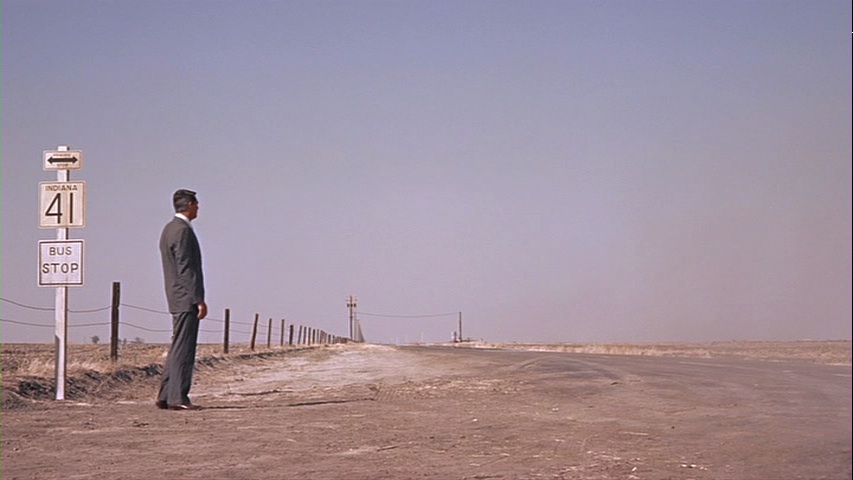
Long Shot:
This shot type is used to show a character's surroundings and can have the effect of making the character seem dominated by their environment, as shown in the example where the character is shown to be small compared to his barren and expansive surroundings.
Medium Shot:
A medium shot is used to show a character's reaction to something (shown or not), but to also show some of their background and their stance, and gait if they are moving. This shot type usually shows the torso and face and shows less facial detail than a close up (see next). Hermione Granger (Emma Watson) is my example of a medium shot, she is casting protective spells in a forest, so a medium shot shows her arms physically casting the spells but also shows her facial features.
Notice the canted angle here? Something is clearly going very very wrong.

Close Up:
A close up is used to show a character's facial reaction to something. This shot type focuses on the face of the character and does not usually include the rest of their body. This is an effective shot type for showing the initial reactions of a character to something emotionally moving or disturbing, especially when the audience is not shown the reason for this reaction first. This example is a particularly moving one, a still from the last episode of a Korean Drama, 49 Days. The character is a "grim reaper" of sorts, and he has come to take a girl he came to consider his friend away through "the elevator" into the next life.
My feels are still very raw...

Extreme Close up:
Similar to a close up, an extreme close up (or ECU) is used to show one part of a character's face, such as their eye or mouth. This is a particularly useful shot for seeing a facial reaction without immediately recognising the character, or to focus particularly on maybe a way in which their facial expression really reflects what they're experiencing. Although the example shows about 2/3 of the character's face, I feel that it really draws the audience's attention to his eyes and therefore focuses on only one aspect of his face as oppposed to the entire thing.

Two-shot:
A two-shot is a shot that simply focuses on two characters at once. Both characters are in the frame, and can be looking at each other, away from each other, at the same thing, etc. This shot type can be used to show that two possibly unrelated characters have something in common, or are interacting with something that links them together. An example of this is from (yet another) Harry Potter film in which Harry and Hermione are looking at the same thing. The two-shot shows that they are both looking at this unknown thing at the same time, and are therefore linked because of that (disregarding their other links and using the image without context)

Shot/Reverse Shot:
This type of shot is less of an actual way of framing and filming, but more of an editing technique that expresses continuity. This is used in conversation to show that the characters are talking to each other, and to show the detail in the speaking character's face when they are talking. Here's a gif example from The Hunger Games, where Katniss and Peeta are shown conversing through the use of shot/reverse shot (although it's almost certain that the takes didn't happen in real-time with what's on-screen, it just helps with making sense of the conversation).

I do believe that is all the people-shots done, now onto the (fewer) shots that usually don't have characters in them but instead focus on the environment.
Environmental shots
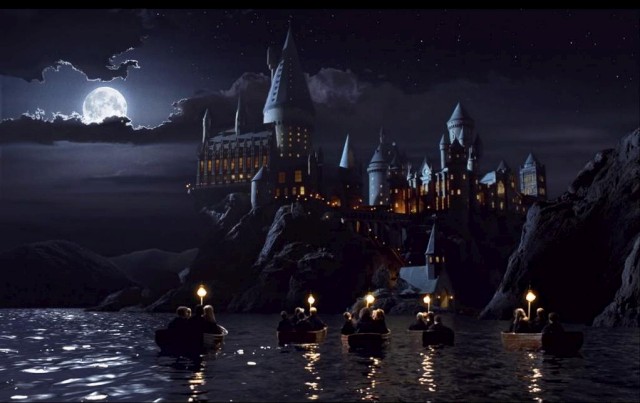
Establishing shot:
An establishing shot does what it says on the metaphorical box. It establishes where the scene or maybe whole text is going to take place. These are used to show where the events of the text are taking place. The example for this shot type again comes from Harry Potter, this is a still from when the first-years are travelling by magical boat to the castle itself. This is an effective use of establishing shots because it shows there is a location change from the train station to Hogwarts (it also looks amazing, very dark and imposing). This particular still also uses low angles to show that the castle is large and dominates the students heading towards it.
Weather shot:
This isn't something we learned in class, but I find it interesting in terms of analysing and interpreting media texts. This shot has the weather as its subject, and can also be used as the background for graphics or special effects. Weather shots can be used for pathetic fallacy, which is where the weather sets or reflects the mood of the text. For example, clear skies with sun might foreshadow a happy or positive scene. Alternatively, using a too-bright colour palette coupled with psychologically disturbing content would be effective because it puts the audience on edge before messing with their psyche (which is totally the intention for that kind of text). The example below shows a tornado taking up most of the framing, which could foreshadow that characters in the text are going to get hurt or displaced.


No comments:
Post a Comment